 BJT提分班
From J2 to J1: How a Working Mom at a Japanese Company Raised Her BJT Score to 533
Her jump from BJT J2 to J1 did not come from last-minute cramming or a magic technique. She did it in the gaps between work, a toddler, a time-zone lag, and cross-border internet hurdles—practicing, asking questions, and reviewing mistakes almost every day.
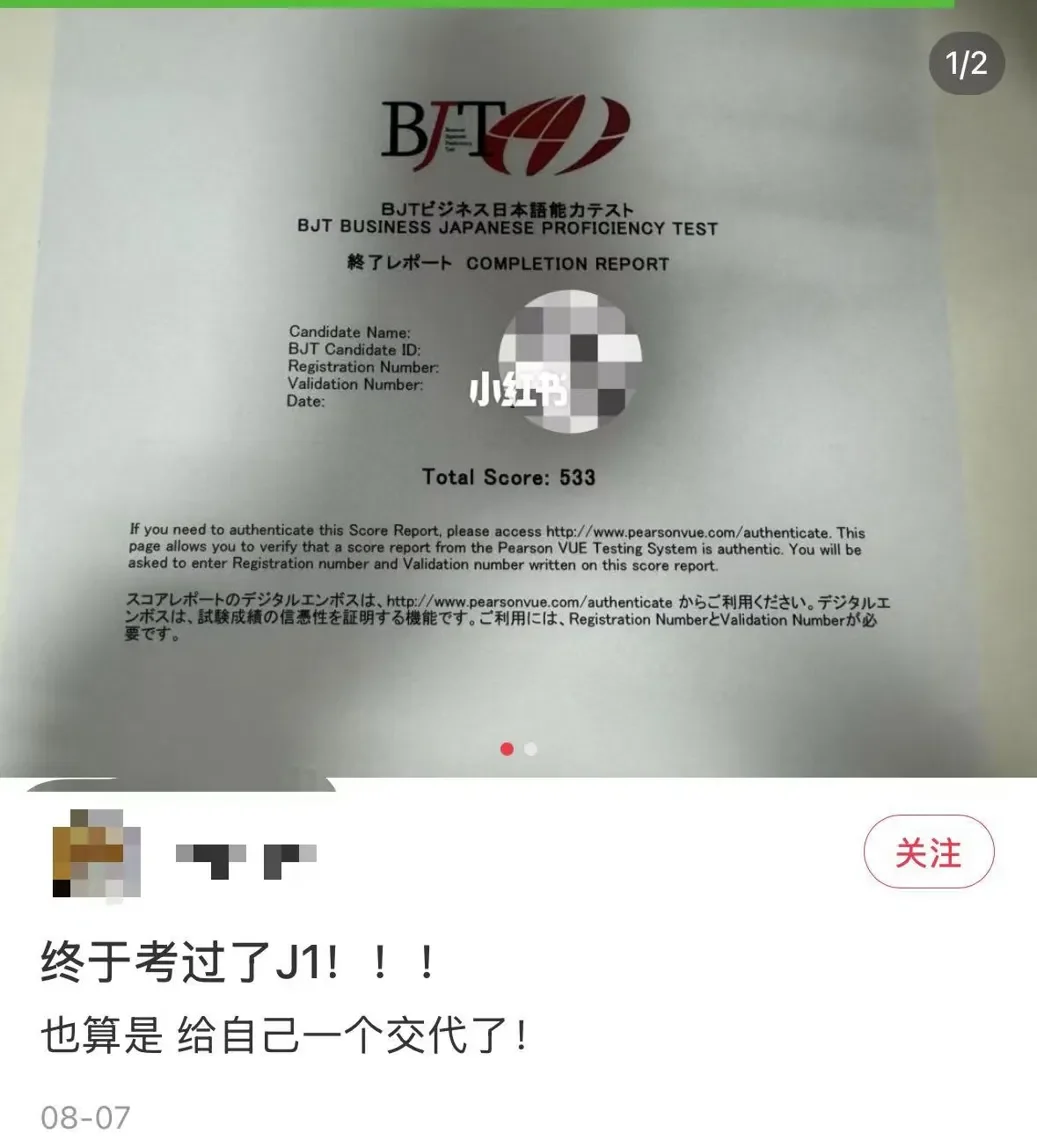
She already held JLPT N1 and had taken the BJT before, but that attempt ended at J2. This time she scored 533, officially reaching J1.
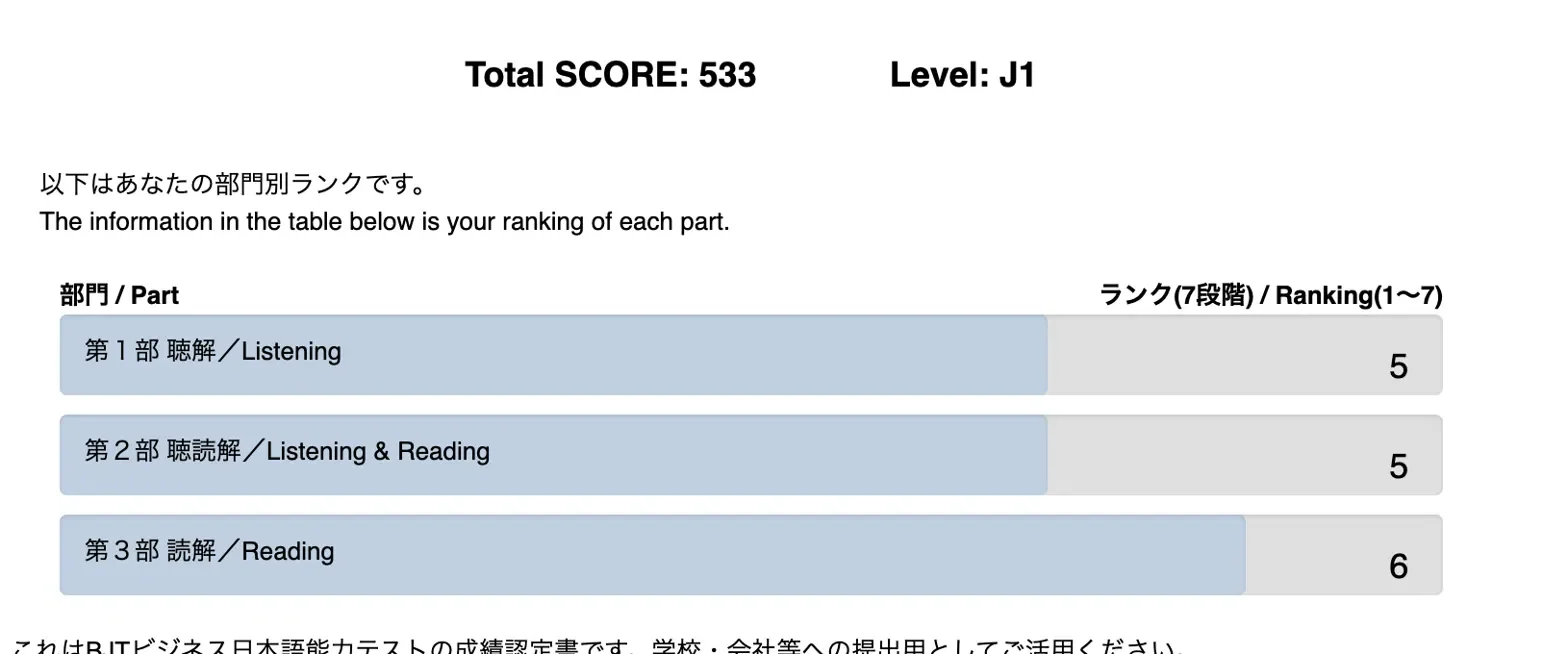
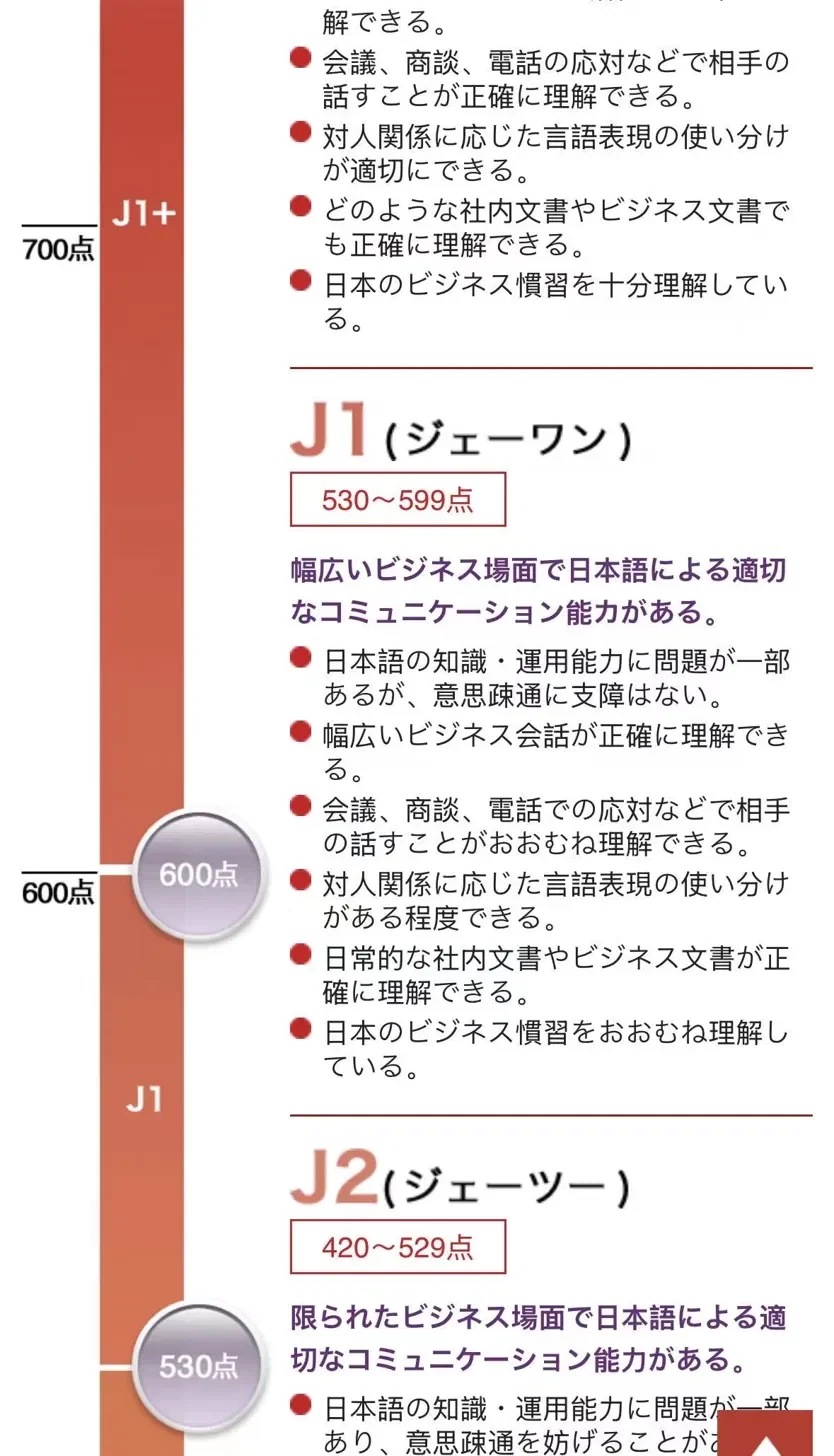
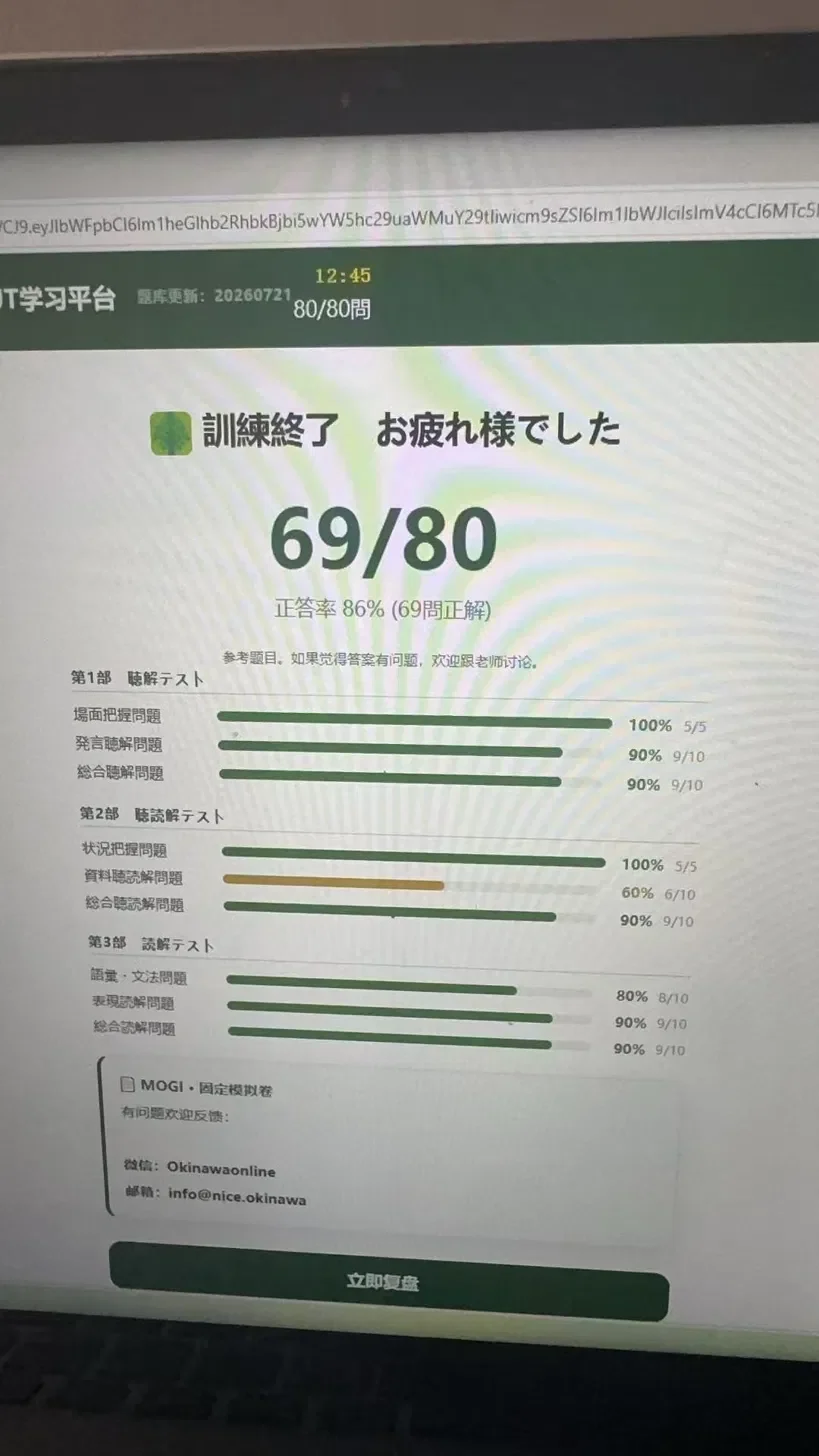
About BJT levels: BJT scores range from 0 to 800. J2 covers 420–529 and J1 covers 530–599. This student scored 533 (J1), with section rankings of Listening 5, Listening & Reading 5, and Reading 6. On our fixed mock exam she answered 69 of 80 questions correctly (86%).
Her study sessions kept getting interrupted by “Spit that out!”
She works at a Japanese company in mainland China and has a small child. There is no clean, quiet desk and no uninterrupted two-hour block every evening. Work, kids, housework, and small emergencies slice the day into fragments, and she carved study time out of them.
Studying for the BJT from mainland China adds two more hurdles
The time difference and mismatched schedules mean questions sent at night may be answered the next morning. Cross-border access can also mean logging in again, reloading, switching networks, and waiting for audio. It looks slow, but the learning never stopped.
She practiced almost daily—and asked questions almost daily
Whenever anything felt unclear, she sent it over: why an option was wrong, how two expressions differed, and who was speaking to whom. We broke each question down through the business scene, relationship, tone, and test logic. Those discussions now live in the system question bank.
From J2 to J1, the gap is not about how many questions you grind
What matters is whether every uncertain question leaves a trace. After a mistake, know why it was wrong and whether you can recognize the idea in another scene. The BJT tests more than vocabulary and grammar; many points are lost when the relationship is misread.
Backend data: She activated the system on June 17 and sat the exam on August 7. Of those 50 days, 45 have study records. She completed 2,817 practice questions—2,537 reached the mastery bar—with 3,036 review actions in total.
She did not take the BJT for a visa
She already had N1, but did not want her Japanese to stall. At a Japanese company, language is a tool used every day and a proof of professional growth.
On test day, I waited with my phone in my hands
Then the message came: Passed. 533. J1. It was not luck; it was one person doing a little every day and watching the effort turn into a result.

In the end, you plow your own field
A teacher can point the direction, hand you tools, and think through problems with you—but no one can practice in your place. What matters is whether today's small progress stays in your field.
What matters most in going from BJT J2 to J1?
Not a last-minute burst, but steady practice, honest review of mistakes, and truly clearing up every “I think I got it.”
How can a full-time worker prepare for the BJT?
Do not wait for a large block of free time. Finish a small fixed set daily, record uncertain items with your reasoning, and review asynchronously. As long as the feedback loop continues, learning does not stop.
I already have N1—is the BJT still worth it?
If you only need one Japanese certificate, N1 has done that job. If you want to keep training comprehension, judgment, and communication in real business settings, there is a long road beyond N1.
Wondering how far you are from J1? Check your score level first, then read the 90-Day BJT Battle Plan, BJT Test-Day Tactics, and the 16-Day Sprint Plan.
Your field, your plow. But you do not have to plow alone.
By Sakana-sensei (小魚先生) | BJT Score-Up Program.